
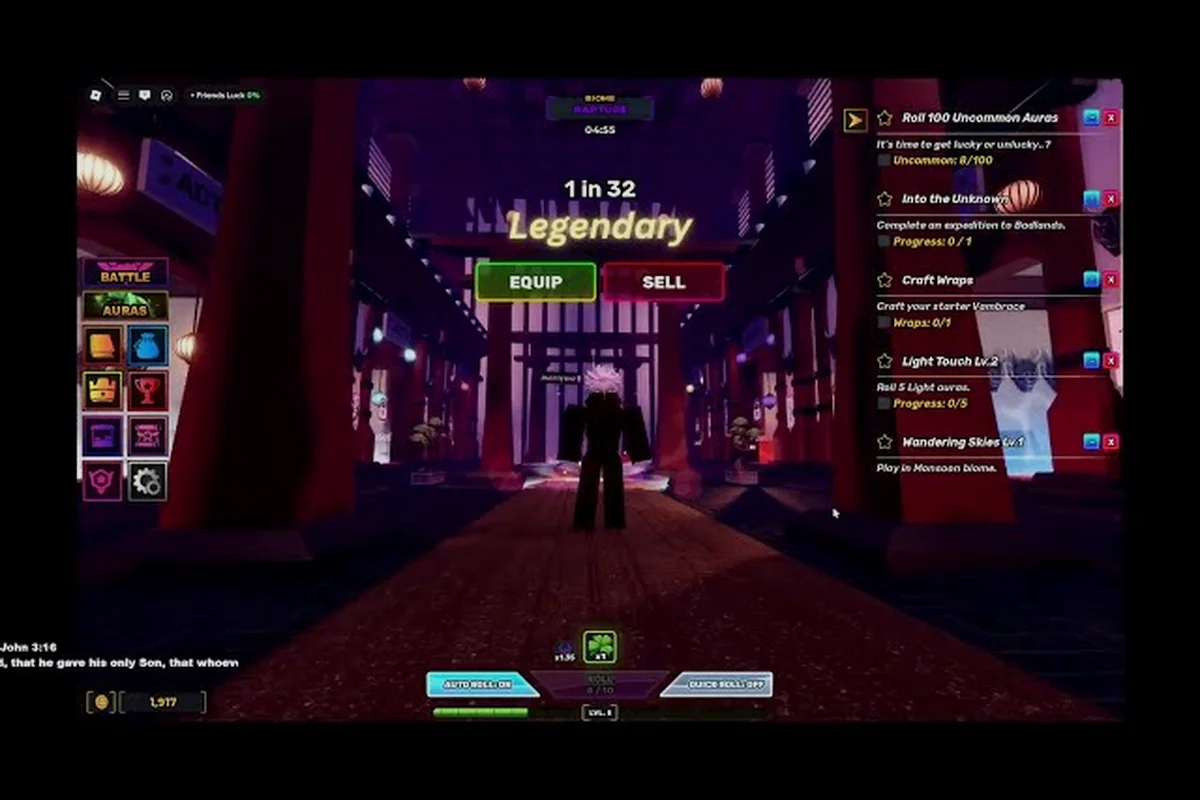
Dojo PvP in Unscathed is where your aura collection stops being a showcase and starts being a weapon. While Story Mode teaches you boss patterns and world-boss mechanics, the Dojo pits you against real players who adapt, bait, and punish mistakes in ways no AI ever will. This Unscathed PvP strategy guide breaks down the combat fundamentals, aura matchups, and dodge timing you need to climb the ranks consistently. Because the game blends Aura RNG battling with skill-based combat, understanding how your rolls translate into actual fight performance matters more than raw rarity.
The core loop is deceptively simple: you roll auras, craft equipment, and upgrade your skill tree, then take that build into the Dojo to test it against other players. According to the official Unscathed page on Roblox, the game positions itself as the first Aura RNG battling game on the platform, which means your PvP success depends on both the auras you roll and how well you execute with them. The players who win consistently are not always the ones with the rarest auras; they are the ones who understand spacing, combo timing, and when to disengage. If you want to turn your collection into actual wins, you need a real Unscathed PvP strategy, not just a lucky roll.
Building Your Unscathed PvP Combo Framework
The foundation of any strong Unscathed PvP strategy is understanding how your aura's active abilities chain together into a combo. Each aura in the game grants passive stat bonuses plus an active ability that you trigger during combat, and the difference between a good player and a great one often comes down to how they sequence those abilities around their basic attacks and dodges. A well-executed combo can delete half an opponent's health bar before they have a chance to react, while a poorly timed one leaves you exposed and vulnerable to punishment.
The standard combo structure that most experienced players use follows a predictable rhythm: open with a gap-closer or ranged ability, follow with two or three basic attacks, then finish with your highest-damage active ability. The reason this works is that most players instinctively dodge after taking the first hit, which means your follow-up attacks need to account for that reaction. If you bait the dodge first, you can punish the recovery frames with your heavy hitter. This is where the unscathed pvp combo becomes less about memorizing button sequences and more about reading your opponent's habits.
Core Combo Archetypes
Different auras support different combo styles, and knowing which archetype your aura fits into helps you build a game plan before the match even starts. Here are the three primary combo frameworks that dominate the current Dojo meta, based on community testing and player reports from the official Discord:
-
Burst Combo — Save your active ability for when your opponent is cornered or recovering from a dodge. The goal is to land one massive hit that forces them to play defensively for the rest of the exchange. This works best with high-damage auras that have long cooldowns, because you are trading sustained pressure for one decisive moment.
-
Pressure Combo — Use your active ability early to apply a debuff or status effect, then follow up with rapid basic attacks while the effect is active. This style rewards auras with short cooldowns and utility effects, because you are constantly forcing your opponent to make decisions while they are at a disadvantage.
-
Bait-and-Punish Combo — Feint an attack to make your opponent dodge, then immediately use your active ability to catch their recovery frames. This is the highest-skill combo archetype because it requires you to read your opponent's tendencies, but it also produces the most devastating results when executed correctly.
The table below breaks down how these combo archetypes compare across key factors that matter in Dojo matches: burst damage potential, stamina drain efficiency, and defensive counterplay windows. For example, a pure attacker archetype like the dual-dagger rush may excel at punishing a defender's missed aura parry, but it leaves you vulnerable to a counter-combo if you mistime your dodge. Conversely, a balanced archetype—pairing a heavy opener with a quick follow-up—offers safer pressure, letting you bait out the defender's aura and then punish the recovery frames. Use this comparison to align your loadout with your preferred risk tolerance, as the tier list later ranks these exact trade-offs for unscathed pvp strategy.
| Combo Archetype | Best Aura Type | Risk Level | Skill Ceiling | When to Use |
|---|---|---|---|---|
| Burst Combo | High damage, long cooldown | Medium | Low | Opening exchange or punishing a whiffed dodge |
| Pressure Combo | Short cooldown, utility effects | Low | Medium | Sustained fights where you have the advantage |
| Bait-and-Punish | Any, requires strong reads | High | Very High | Against aggressive opponents who dodge on reflex |
The key insight here is that your unscathed pvp combo should match your aura's strengths rather than forcing a style that does not fit. If you are running a defensive aura with strong counter-attack potential, the bait-and-punish archetype will serve you far better than trying to burst through an opponent who out-damages you. According to community reports, players who adapt their combo style to their aura's kit consistently outperform those who try to force a single approach.
Unscathed PvP Tier List for the Current Meta
When players ask about the best attacker or the strongest defender aura, they are really asking about the current PvP tier list. The meta shifts with each patch, but as of August 2026, community testing has settled on a fairly clear hierarchy for Dojo performance. This unscathed pvp tier list is based on aggregated player experience from the official Discord and tournament results reported by the community, so it reflects real performance rather than theoretical potential.
The most important thing to understand about tier lists in Unscathed is that they measure auras in a vacuum, assuming equal player skill and optimal execution. A lower-tier aura in the hands of a player who understands spacing and dodge timing can still beat an S-tier aura wielded by someone who just spams abilities. That said, the tier list gives you a solid baseline for what to prioritize when you are rolling for PvP-focused auras or deciding which ones to invest your upgrade materials into.
Attacker Aura Rankings
The attacker role in Dojo PvP is about applying consistent pressure and converting openings into damage. The best attacker auras combine high base damage with abilities that either close distance quickly or extend your combo potential. Based on community testing and match data shared in the official Happy Goof Games! Roblox group, here is how the current attacker meta shakes out:
| Tier | Aura Examples | Strengths | Weaknesses |
|---|---|---|---|
| S-Tier | Auras with gap-closers and high burst | Can force engagements and punish mistakes hard | Often have longer cooldowns that leave windows open |
| A-Tier | Balanced damage with utility effects | Reliable in most matchups, flexible combo options | May lack the burst needed to close out fights quickly |
| B-Tier | Situational damage or niche effects | Strong in specific matchups or with certain builds | Struggles against meta picks or defensive setups |
| C-Tier | Low damage or awkward ability timing | Usable in casual play or with heavy skill investment | Outclassed by most other options in ranked Dojo |
The unscathed best attacker pick right now, according to player reports, is an aura that combines a reliable gap-closer with a damage amplification effect on its active ability. This lets you close distance, apply pressure, and then cash in on the amplified damage window before your opponent can reset the engagement. What makes this aura stand out is that its kit supports both the burst and pressure combo archetypes, giving you flexibility to adapt mid-match based on how your opponent is playing.
Defender Aura Rankings
Defensive auras fill a completely different role in Dojo PvP, trading raw damage output for survivability and counter-attack potential. The unscathed defender aura archetype is all about outlasting your opponent, forcing them to overextend, and punishing their mistakes with well-timed counter-attacks. These auras are particularly strong against aggressive players who rely on pressure combos, because they give you the tools to absorb the initial assault and turn the tables.
| Tier | Aura Examples | Strengths | Weaknesses |
|---|---|---|---|
| S-Tier | Auras with damage reduction and counter abilities | Can survive burst combos and punish whiffs | Lower damage output means longer fights |
| A-Tier | Shield effects with decent utility | Strong sustain and team utility in 2v2 modes | Vulnerable to sustained pressure from multiple angles |
| B-Tier | Healing or regen effects | Good for attrition fights | Struggles against high burst that outpaces healing |
| C-Tier | Minor defensive bonuses | Situational use only | Outclassed by almost everything else in the Dojo |
The strongest defender aura in the current meta, based on community data, combines a damage reduction passive with an active ability that creates a counter-attack window. When you activate it, you take reduced damage for a short duration, and if the opponent hits you during that window, they take a portion of the damage back. This creates a powerful mind game where aggressive opponents have to decide between feeding your counter or backing off and giving you space to reset.
Mastering Unscathed Dodge Timing
The single most important mechanical skill in Dojo PvP is learning how to dodge effectively, and this is where most players lose matches they should win. The unscathed how to dodge question comes up constantly in community discussions because the dodge mechanic has more depth than it first appears. It is not just about pressing the dodge button when you see an attack coming; it is about understanding the timing windows, the recovery frames, and how to use dodges to create offensive opportunities rather than just defensive ones.
The basic dodge gives you a brief window of invulnerability, but the exact timing matters more than most players realize. If you dodge too early, you will be caught in the recovery frames when the attack actually lands. If you dodge too late, you will take the hit before the invulnerability frames activate. According to player experience shared in the community, the sweet spot is roughly a third of a second before the attack would connect, which means you need to anticipate attacks rather than react to them.
Reading Opponent Patterns — Pvp Strategy
The key to consistent dodging is learning to read your opponent's attack patterns rather than trying to react to every individual hit. Most players fall into predictable rhythms, especially when they are under pressure, and exploiting those patterns is how you turn defense into offense. Here are the most common patterns you will encounter in the Dojo and how to punish them:
-
Spam Attackers — Players who mash basic attacks without mixing in abilities are the easiest to read. Wait for the third attack in their chain, dodge through it, and punish their recovery frames with your own combo. The timing is consistent because they are not varying their rhythm.
-
Ability-First Players — Some players open every exchange with their active ability, hoping to catch you off guard. If you notice this pattern, bait it out by moving into their range and then dodging as soon as you see the animation start. Their ability is now on cooldown, and they have no answer to your pressure.
-
Dodge-Happy Opponents — Players who dodge at the first sign of any attack are vulnerable to feints. Start an attack animation and cancel it, which will trigger their dodge, then punish the recovery frames with your real combo. This is the foundation of the bait-and-punish archetype we covered earlier.
The table below summarizes the dodge timing windows and what you should do in each scenario, but reading it in isolation won’t save you—timing alone is only half the battle. Each window corresponds to a distinct attacker animation, from the flash of a defender aura to the wind-up of a heavy combo, and your response must chain into your next move. For instance, a perfect dodge on a slow overhead strike buys you a 0.8-second punish window, ideal for landing an unscathed pvp combo starter like a quick jab into a lunging thrust. Miss that window by even a frame, and you’ll eat the hit, losing your unscathed bonus and handing your opponent momentum. Practice these timings in sparring mode until the visual cue becomes instinctive, then layer in your tier list’s best attacker to maximize counter-damage.
| Scenario | Dodge Timing | Follow-Up Action |
|---|---|---|
| Basic attack chain | Dodge through the third hit | Punish recovery with your combo starter |
| Active ability telegraph | Dodge as the animation starts | Close distance while they are on cooldown |
| Gap-closer ability | Dodge perpendicular to the approach | Counter-attack from the side |
| Combo finisher | Dodge slightly early to avoid the final hit | Reset to neutral and re-engage |
Mastering these timing windows takes practice, but the payoff is massive. Players who consistently land their dodges effectively can win matches against opponents with better auras simply by denying their damage and punishing their mistakes. The unscathed how to dodge skill is genuinely the great equalizer in Dojo PvP, which is why every serious player spends time in the training area working on their timing.
Advanced PvP Strategy and Matchup Adjustments
Once you have the fundamentals down, the next step in your Unscathed PvP strategy is learning to adjust your approach based on the matchup. Every aura has strengths and weaknesses, and the best players are the ones who can identify their opponent's game plan within the first few seconds of a match and adapt accordingly. This is where the game's depth really shines, because there is no single build that wins every matchup.
The most important matchup consideration is whether you are facing an attacker or a defender aura. Against attackers, you need to focus on dodging their burst windows and punishing their aggression, because they will be trying to close distance and unload their combo. Against defenders, you need to be patient and avoid overextending, because they are waiting for you to make a mistake so they can counter-attack. Trying to force the same approach against both playstyles is a recipe for inconsistent results.
Counter-Play and Adaptation
Effective counter-play requires you to identify your opponent's tendencies early and adjust your game plan on the fly—especially in the first 10 seconds, where most players telegraph their preferred unscathed pvp combo or defensive stance. For example, if your rival immediately spams the defender aura, they’re likely banking on passive chip damage; instead of trading blows, pivot to feinted dodges to bait their aura cooldown, then punish with a quick two-hit chain. Conversely, an aggressive opener signals they’ll chase your rolls, so hold your ground and time a parry to flip momentum. Here are some practical adjustments you can make based on what you observe in the first exchange:
-
If your opponent opens with their active ability every time — Start the match by moving into their range and then dodging immediately. This baits out their ability, and once it is on cooldown, you have a window of advantage to press your own offense.
-
If your opponent plays very defensively — Do not chase them into corners. Instead, control the center of the arena and force them to come to you. Defensive players thrive when they can react to your aggression, so denying them that reaction window is key.
-
If your opponent spams dodges — Use feints and cancelled attacks to bait out their dodges, then punish the recovery frames. This requires patience, but it will completely shut down their defensive game.
-
If your opponent is very aggressive — Let them overextend. Aggressive players often leave themselves exposed after their combos, and if you can dodge through their initial assault, you can punish them while they are recovering.
For a deeper dive into which auras perform best in specific scenarios, check out our Unscathed tier list guide for a comprehensive breakdown of every aura's PvE and PvP potential. You can also review our best damage aura guide if you are specifically looking to maximize your offensive output in the Dojo.
Positioning and Arena Control
Positioning is an underrated aspect of Dojo PvP that separates good players from great ones. The arena is large enough that you have room to maneuver, but small enough that you cannot simply run away forever. Controlling the center of the arena gives you the most options, because you can retreat in any direction or close distance to engage. Players who hug the walls limit their own escape routes and make themselves predictable.
When you are at an advantage, you want to push your opponent toward the edges of the arena to limit their options. When you are at a disadvantage, you want to create space and reset to neutral rather than fighting while you are behind. This is especially important against defender auras, because they want you to overextend into their counter-attack range. Denying them that opportunity by maintaining good positioning is often enough to force them into making mistakes.
Frequently Asked Questions
What is the best attacker aura for Dojo PvP?
The best attacker aura combines a reliable gap-closer with a damage amplification effect, letting you close distance and cash in on an amplified damage window. According to community testing, this kit supports both burst and pressure combo styles, making it flexible across different matchups. The exact aura may shift with future patches, so check the latest community tier lists.
How do I improve my dodge timing in PvP?
Practice anticipating attacks rather than reacting to them, because the dodge window is roughly a third of a second before impact. Focus on reading your opponent's patterns, such as whether they open with abilities or spam basic attacks, then dodge accordingly. Punish the recovery frames after their whiffed attacks to turn defense into offense.
Which defender aura is strongest in the current meta?
The strongest defender aura combines damage reduction with a counter-attack effect that reflects damage when you are hit during the active window. This creates a powerful mind game against aggressive opponents, forcing them to choose between feeding your counter or backing off. It excels in attrition fights where you can outlast your opponent's resources.
How many times should I use my active ability in a match?
It depends on your combo archetype. Burst combos save the ability for a decisive moment, while pressure combos use it early to apply a debuff and follow up with basic attacks. The key is to avoid using it predictably, because opponents will start baiting it out. Mix up your timing to keep them guessing.
Can a lower-tier aura beat an S-tier aura in PvP?
Yes—if you execute an unscathed PvP strategy. Landing perfect dodges and punishing whiffs beats raw tier power. A lower-tier aura with tight spacing and combo timing will dismantle an S-tier player who spams. Tier lists assume ideal play; your fundamentals decide real matches.